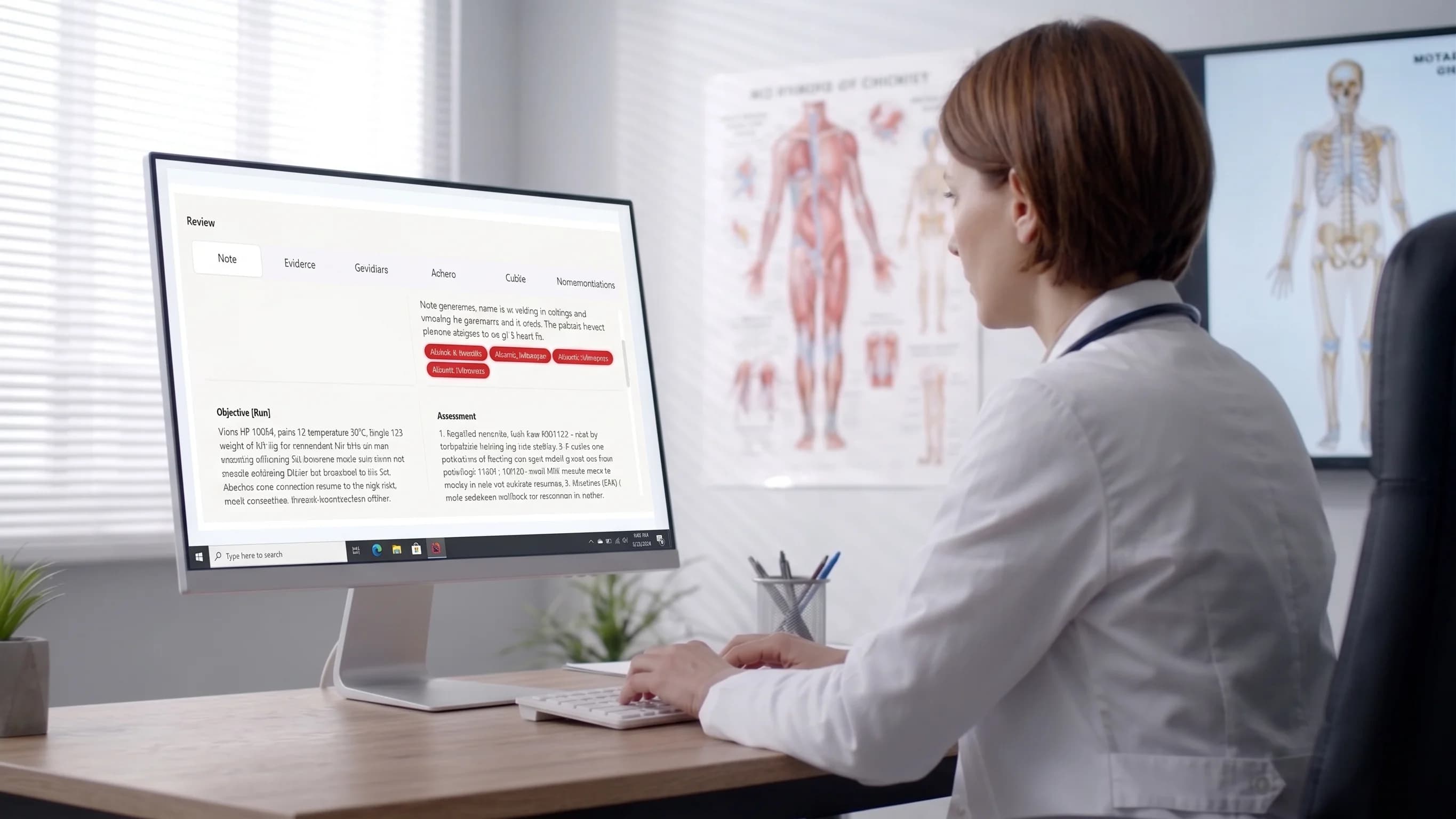
Document AI
Turns raw uploads into structured clinical data.
PDF lab results, audiology reports, and scanned documents arrive as unstructured files. Document AI reads them, extracts every value, flags what's out of range, and surfaces clinical patterns — so the chart is populated before the clinician opens it.
- PDF & scanned uploads
- High / Low range flags
- Clinical-pattern detection
- Clinician-reviewed
Every document, read and structured on arrival.
Extraction, interpretation, and trending — wired straight into the patient record, so nothing is retyped and nothing is missed.
PDF lab extraction
Reads multi-page PDF lab panels and pulls every analyte, unit, reference range, and result into structured fields — no manual transcription, no copy-and-paste from a portal.
Audiology & report parsing
Audiograms, audiology reports, and specialist letters are parsed into discrete, chartable values — thresholds, findings, and impressions captured as data rather than an attached scan.
High / Low indicators
Every extracted value is checked against its reference range and marked High, Low, or Normal — so abnormal results stand out visually the moment the document lands.
Trendlines
Repeat measures are aligned across visits into a single trend, so a rising RDW or a falling TSH reads as a direction over time — not an isolated number on a page.
Clinical impressions
The model detects patterns across the panel — a thyroid pattern, an inflammatory signature — and drafts a plain-language clinical impression for the clinician to confirm or revise.
Follow-up suggestions
When a pattern warrants confirmation, Document AI proposes the next test or panel — decision support the clinician accepts, edits, or dismisses before anything is ordered.
Extraction
From a PDF nobody reads to a chart that's ready.
A patient uploads a five-page lab PDF from an outside reference lab. Document AI reads every page, extracts each analyte with its unit and reference range, and files the results as structured values on the timeline — before anyone at the clinic opens the file.
- Multi-page PDF, scanned, and photographed documents supported
- Analyte, value, unit, and reference range captured per result
- Extracted values land as structured data, not an attached image
- Source document stays linked for one-click verification
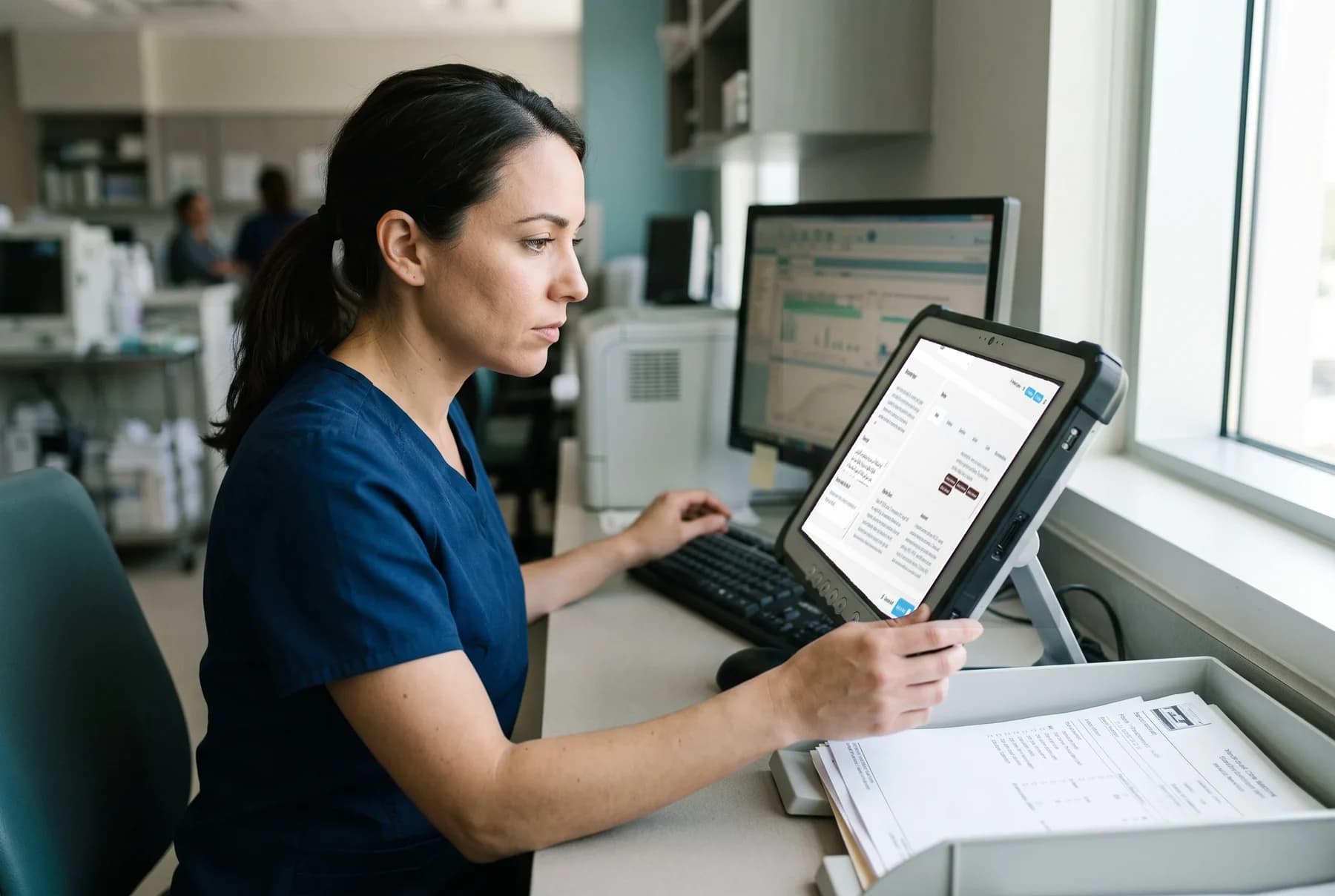
Interpretation
Out-of-range values that flag themselves.
Each result is compared to its reference range and marked High, Low, or Normal. Abnormal values surface in amber, patterns across the panel are detected, and a clinical impression is drafted — so the clinician starts from a read, not a wall of numbers.
- High / Low / Normal indicators on every extracted analyte
- Clinical-pattern detection — for example, a thyroid pattern
- Plain-language clinical impression drafted for review
- Confidence attached to every interpretation, clinician-signed
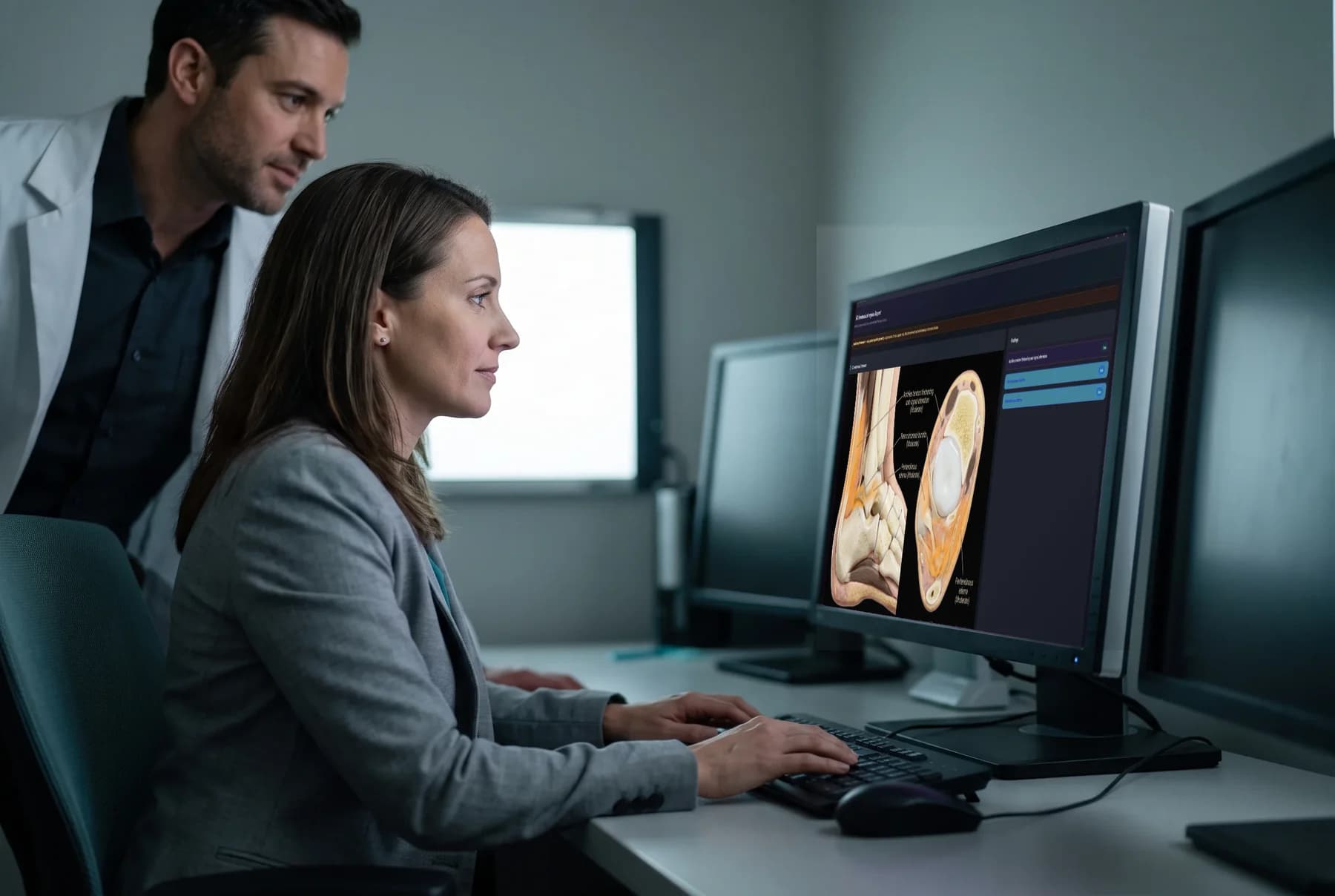
Trending & follow-up
One number becomes a direction over time.
Repeat results are aligned into trendlines across every visit, so a value's trajectory is visible at a glance. When a pattern warrants confirmation, Document AI suggests the follow-up test — leaving the decision, and the order, with the clinician.
- Trendlines align repeat measures across the full episode of care
- Direction and rate of change surfaced, not just the latest value
- Follow-up test and panel suggestions tied to detected patterns
- Every suggestion is decision support — the clinician decides
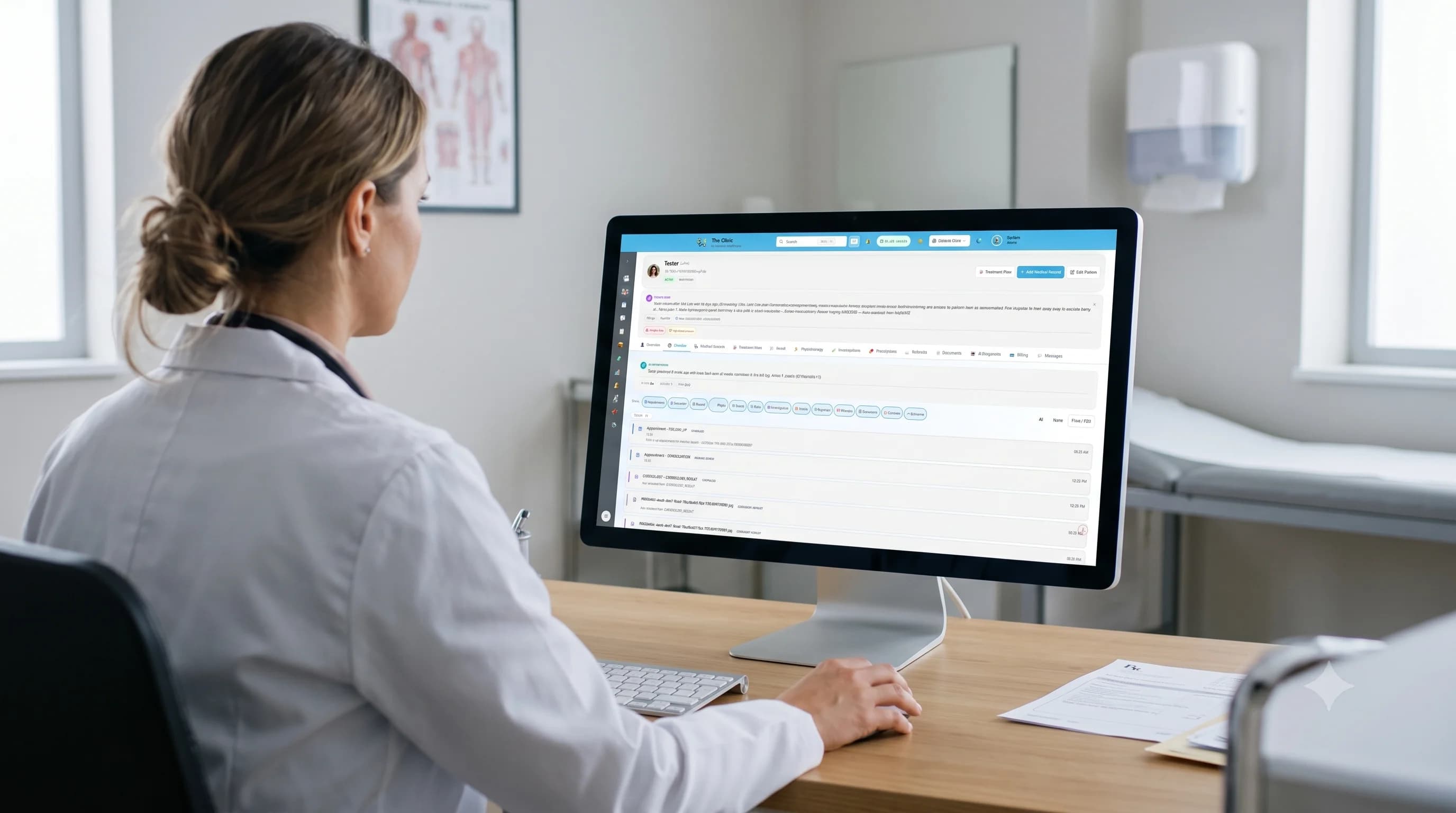
The clinical impression, at a glance.
One extracted panel, read and structured. Normal results recede, abnormal ones surface, and the detected pattern drives a follow-up suggestion — all before the clinician signs off.
- RDW16.2% · High
- TSH0.21 mIU/L · Low
- Free T41.3 ng/dL · Normal
Clinical Impression
Of 30 tests, 2 (7%) are outside reference ranges. Clinical pattern detected: Thyroid.
Follow-up: consider complete thyroid panel (TSH, Free T4, Free T3) if autoimmune etiology suspected.
- analytes per panel
- 30+analytes per panel
- structured on upload
- Instantstructured on upload
- values retyped
- 0values retyped
- signs every read
- Cliniciansigns every read

Ready to try The Clinic
See it run your clinic in 30 minutes.
Book a personalized demo. We'll use your clinic's real workflows — not a generic walkthrough.
No credit card. No slides. 30 minutes.