One platform. Every location. Real numbers.
The Clinic is the practice OS for multi-site groups running 3–20 providers across several locations — unified scheduling, one patient graph, and one consolidated report across every location.
Running 5 clinics with 5 different systems.
Each location is its own island. Schedules don't line up. Every month-end is a scramble for numbers across five systems. A patient seen at one site is a stranger at the next. IT keeps three vendors on speed-dial just to keep the logins working.
One tenant, many locations, shared patient graph.
Every clinic in the group runs on the same platform, with one scheduling engine and strict per-location permissions — and each clinic's numbers flow into one consolidated report. New sites come online in days, not quarters.
SHARED SCHEDULE
Cross-location scheduling with a waitlist at every clinic.
One availability engine across every clinic. Front desk teams see real-time capacity at sister sites, move a patient to the next available slot in any location — and each clinic's waitlist catches its own cancellations.
- Unified calendar across every clinic, room, and provider
- Route overflow to the nearest location with open capacity
- Waitlist auto-fills a cancelled slot and offers it to the next patient in line

CONSOLIDATED REPORTING
One report across every location.
One consolidated report covers every clinic in the group — visits, new patients, invoiced and paid, claim counts — broken out by clinic and by region. It pulls every figure straight from each clinic's records, so there's nothing to stitch together at month-end.
- A consolidated report across every clinic in the group: visits, new patients, invoiced and paid
- Per-clinic figures beside the group total, and a per-region breakdown
- CSV, Excel and PDF export from the reports screen
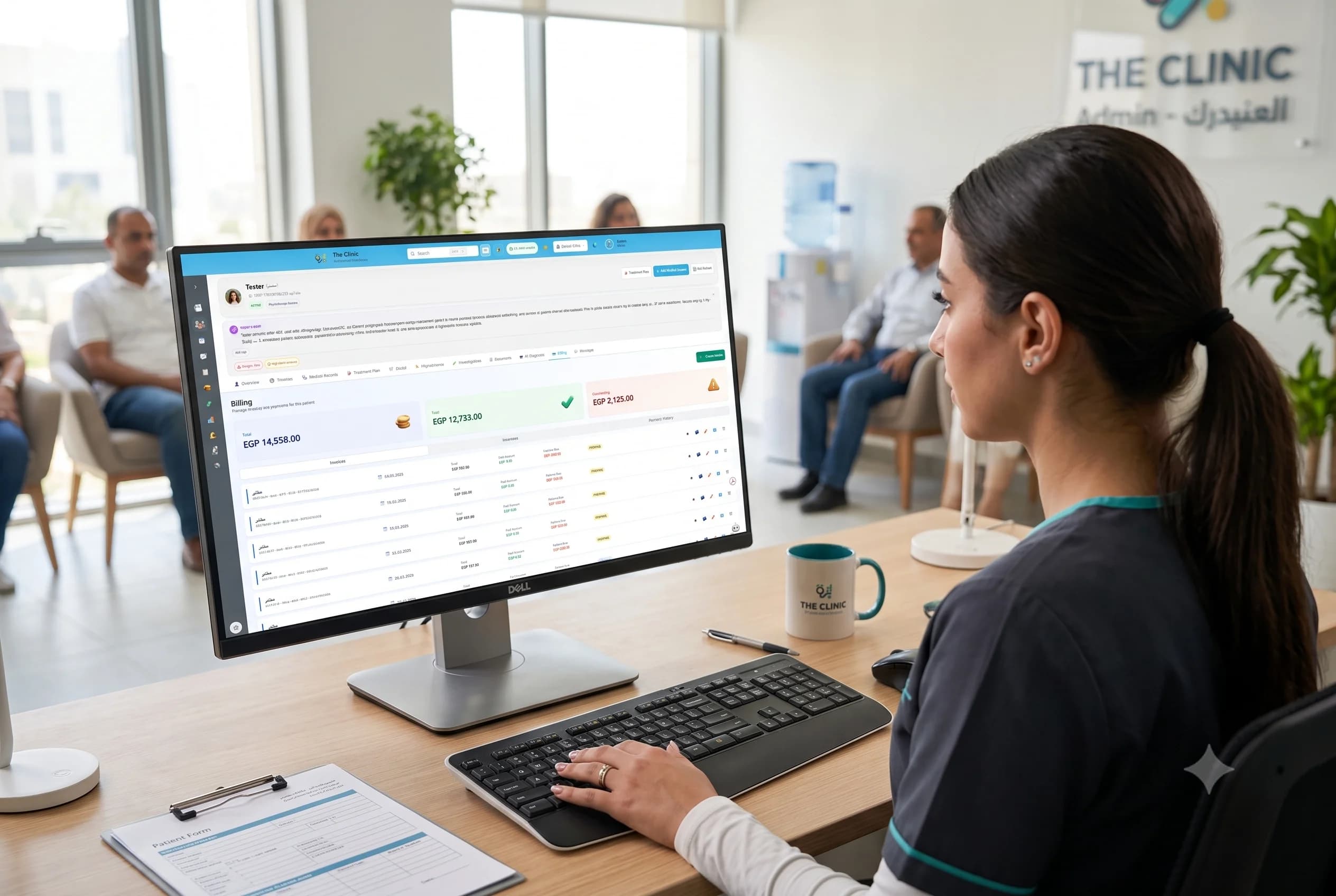
ACCESS CONTROL
Role-based access — by location, by role, by patient.
A receptionist in clinic A doesn't see financials in clinic B. A locum covering three sites this week is granted access to exactly those sites — and an administrator revokes it the moment they're done. Policies are explicit, auditable, and enforced at the database, not the UI.
- Permissions scoped to location, role, and patient relationship
- Cross-location access grants an administrator can revoke at any time
- Full audit trail on an append-only log the application cannot rewrite

Everything the group needs. Nothing each clinic has to rebuild.
Centralized patient records
One chart, every location. A patient seen in clinic A on Monday shows up with full history in clinic C on Friday — labs, imaging, meds, allergies, the whole record.
Referrals
Refer within your clinic or to an outside provider without leaving the chart. Each referral generates a PDF ready to send, and a referral to a colleague in the clinic notifies them right away.
Per-location billing rules
Fee schedules, tax rules, and payer contracts configured per site. Group templates for what's common, overrides for what's not.
Per-clinic AR and collections
AR and aging per clinic, with collections tracked against each clinic's own ledger.
Central identity & access
Google sign-in or email and password, with optional two-factor enrollment your admins can enforce. Roles, per-user restrictions and session policy are managed centrally across every clinic.
Payer enrolment
Enrol each provider with a payer per service location — claim routing uses that enrolment to send each claim down the right rail.
Every clinic in the group gets the same security posture — from day one, without a procurement cycle.
Multi-site questions
What clinic groups ask first.
Is the patient record shared across every location?
No, and that is deliberate. Each clinic is its own tenant with its own records, and the platform enforces that boundary in the database rather than the interface. A patient seen at two sites has a chart at each. One person can use a single login to reach both clinics' patient portals, but clinical data does not move between them.
Can a patient be booked at another location when their clinic is full?
Scheduling is per clinic: each site has its own calendar, rooms and providers, and the waitlist that catches a cancellation is scoped to that site. Staff who work at more than one location reach each clinic from a single login and can switch between them, but overflow is not routed between sites automatically.
Can each clinic keep its own fee schedule and tax rules?
Yes. Fee schedules, tax rules and payer contracts are configured per site, with group templates for what is common and overrides for what is not. Accounts receivable and collections are tracked against each clinic's own ledger.
How do permissions work across locations?
Access is scoped by location, role and patient relationship, so a receptionist at one clinic does not see financials at another. Cross-location access — for a locum covering several sites, for example — is granted explicitly and an administrator can revoke it at any time. Permissions are enforced at the database rather than the interface, and every change lands on an append-only audit log the application cannot rewrite.
Can we report across every clinic in the group?
One consolidated report covers every clinic — visits, new patients, invoiced and paid, and claim counts — with per-clinic figures beside the group total and a per-region breakdown. Every figure is pulled straight from each clinic's records, and the report exports to CSV, Excel and PDF.

Ready to try The Clinic
See it run your clinic in 30 minutes.
Book a personalized demo. We'll use your clinic's real workflows — not a generic walkthrough.
No credit card. No slides. 30 minutes.