Buyer's guide · Ontario
Five questions that actually separate physiotherapy software in Ontario.
Every vendor's feature list looks the same by the third demo. These are the questions where the answers genuinely differ, why each one matters in Ontario specifically, and what a straight answer sounds like. We answer all five about ourselves at the end, including where we come up short.
- Four Ontario payers
- PHIPA in writing
- Imaging in the chart
- Canadian French
- Data you can take with you
Why feature lists stop helping
Everyone has scheduling. Almost nobody explains Ontario.
Booking, charting, invoicing and reminders are table stakes. By the third demo every product does all four, the screens blur together, and the decision drifts to whichever salesperson you liked most. That is how clinics end up switching again eighteen months later.
The questions below are the ones where answers actually diverge, and four of the five are specific to practising in Ontario. They are deliberately awkward. Each one has a verifiable answer that a vendor can either give you plainly or talk around, and how they handle being asked tells you as much as the answer does.
Ask them in writing, and ask for the answer in writing. A feature that is on a roadmap, in beta, or waiting on someone else's certification is a different thing from a feature you can use on Monday — and the difference is invisible on a comparison chart.
Payers
"Supported" and "transmitted" are not the same word.
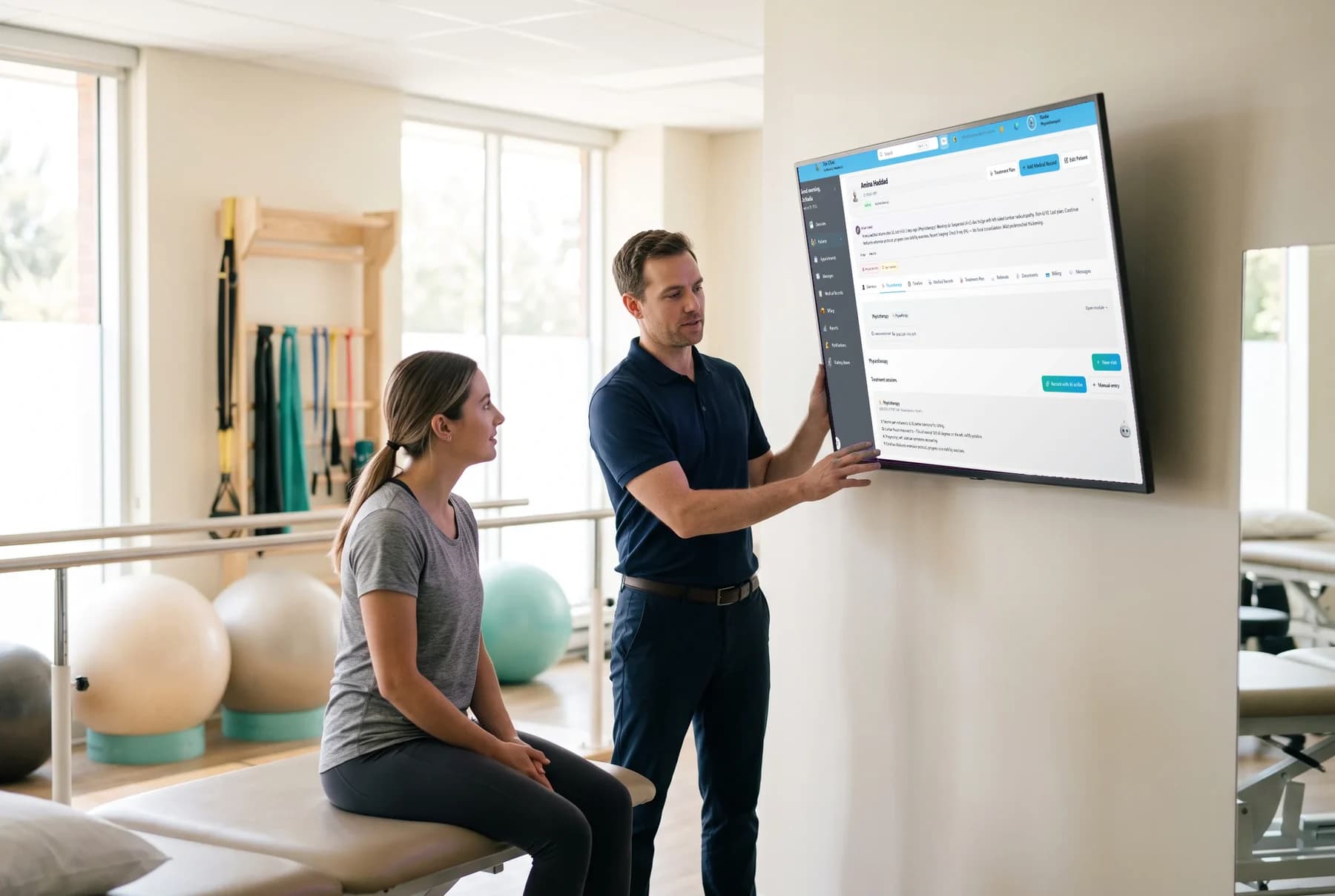
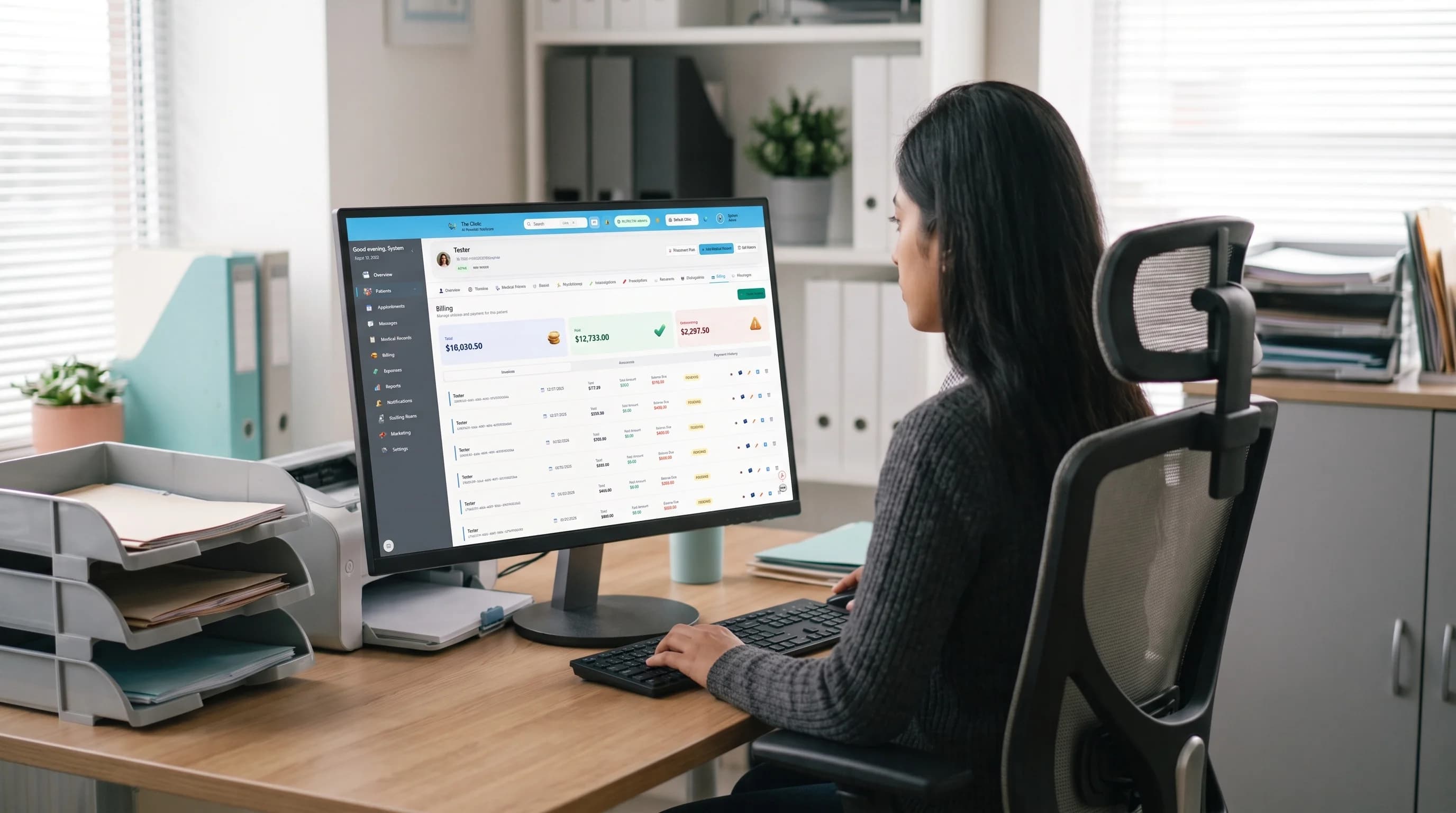
Ontario physiotherapy is paid by four different payers, each with its own paperwork: extended health through TELUS eClaims, auto insurance on OCF forms through HCAI, WSIB through its own provider channels, and OHIP for clinics designated for the publicly funded program. A vendor can honestly say it "supports" a payer when all it does is record the claim for you to key in somewhere else. Ask which ones the software transmits, today, from your account.
- Ask per payer, not about Ontario as a whole — the four are separate rails
- Separate what transmits electronically from what is tracked and filed by hand
- Ask what is gated on a certification or agreement the vendor does not control
- Ask what the software does when a claim cannot be routed: refuse, or file blind
The record
Where imaging and outcomes actually live.
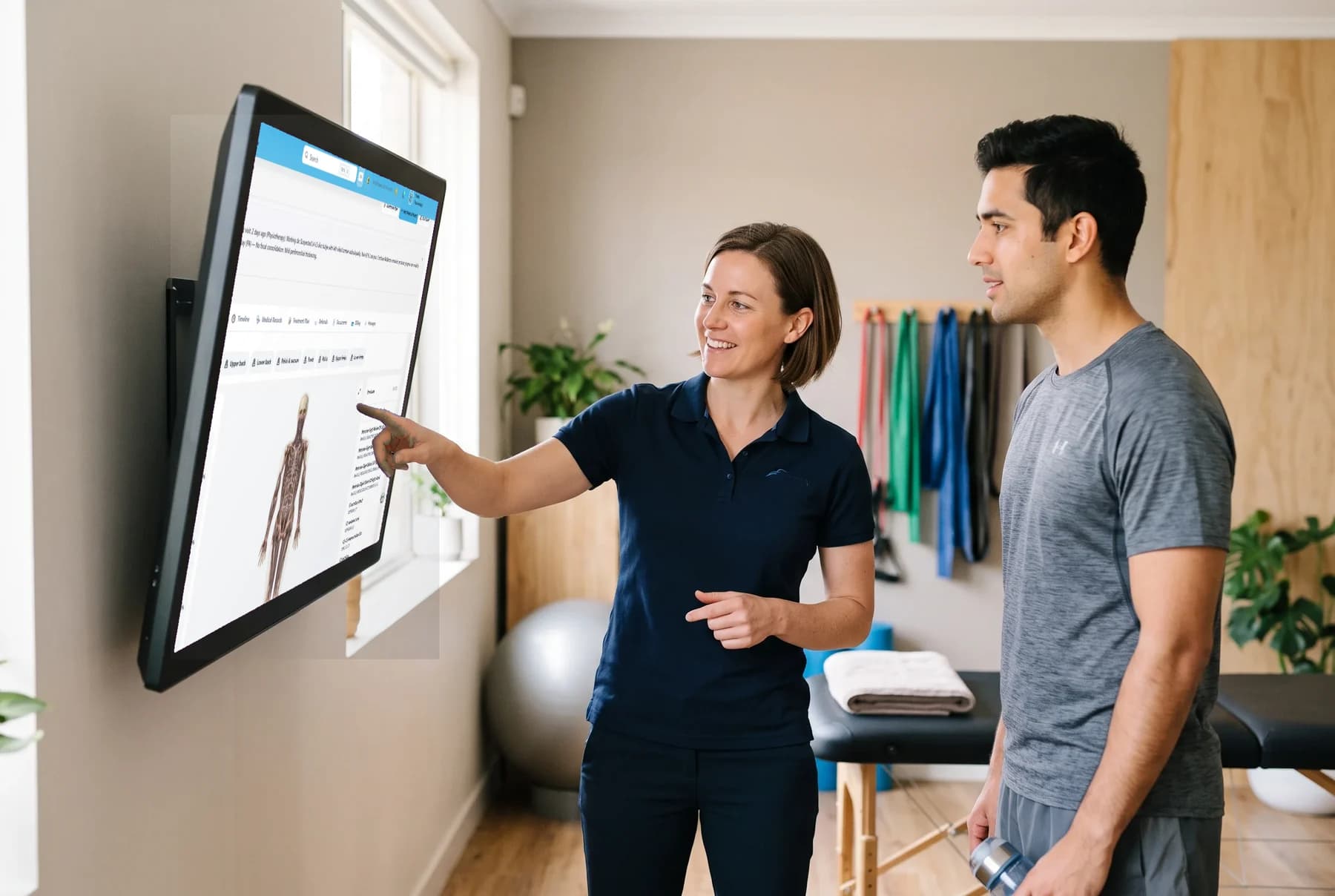
Two systems can both claim imaging and outcome measures and mean completely different things. Attachments on a patient file are not the same as images in the chart, and a free-text box where you type a score is not the same as an outcome measure that trends across an episode of care. The distinction shows up the day you need to see whether someone improved, or to hand a report to an insurer.
- Attachments on a file, or images viewable in the chart alongside the note
- Outcome scores typed as text, or captured as measures that trend over time
- Whether findings land somewhere structured, such as a body map, or only in prose
- Whether last visit's exercise plan carries forward, or gets retyped every session
Language and exit
Two questions people only ask once it is too late.
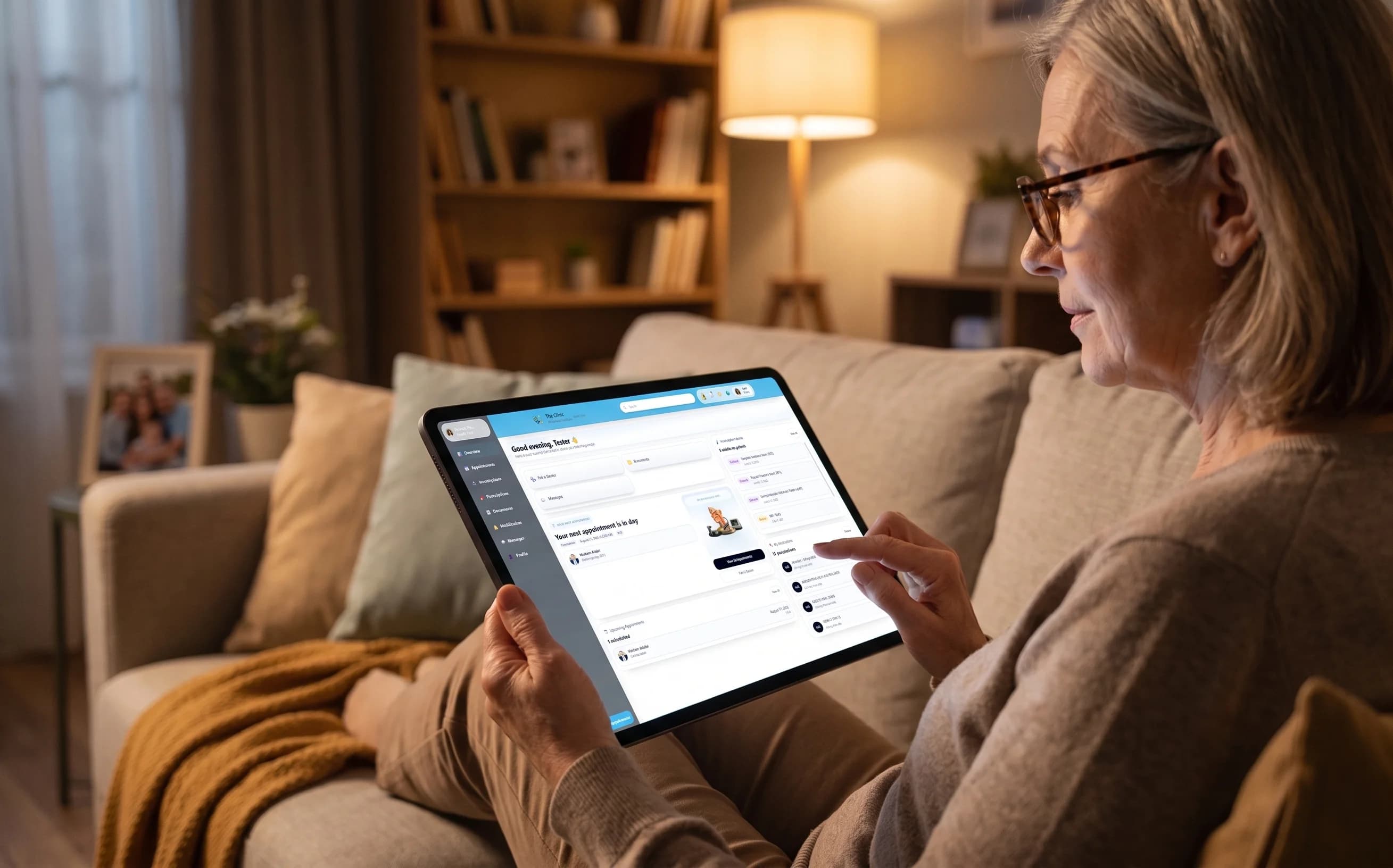
Ontario has designated French-language service areas, and "we support French" can mean a translated booking page in front of an English-only clinical system. Ask to see a staff member's screen in French, not a patient's. The other question nobody asks during a demo is how they would leave: what the export contains, what format it is in, and whether they can run it themselves without asking permission.
- French for staff and clinicians, not only the patient-facing booking flow
- Canadian French rather than a European translation, which reads wrong to patients here
- An export you can trigger yourself, covering clinical records and not just a contact list
- A file you can actually open and read, in a documented format
What to write down before the demo
- 4
- Ontario payers to ask about separately
- 10(4)
- the PHIPA clause to ask for
- FR
- staff screens, not just patient booking
- Exit
- the export, asked for up front
The five questions
Ask these, in this order.
Each one takes about a minute to ask and is hard to answer vaguely without it being obvious. Take notes: you are comparing answers, not impressions.
- 01
Which of the four Ontario payers does it actually file?
Extended health, auto, WSIB and OHIP are four separate rails, not one "Canadian billing" feature. Ask which ones transmit electronically from your account today, which are recorded for you to file by hand, and which are waiting on a certification the vendor does not control. A vendor that names its gaps without being pushed is telling you how it will behave when something goes wrong later.
- 02
Does it hold a PHIPA network-provider role, in writing?
PHIPA certifies no software, so "PHIPA compliant" on a website means nothing on its own. What means something is the contract. Your clinic is the health information custodian; ask whether the vendor acts as a Health Information Network Provider under section 10(4), and ask to see that in the data processing agreement rather than on a marketing page. Ask separately whether record access is logged, and whether you can export that log.
- 03
Can imaging live in the chart, or only as attachments?
Ask to see an image opened inside a clinical note, not downloaded from a file list. If the clinic does any imaging, or receives it from elsewhere, the difference is minutes per visit and it compounds. Ask which standard the system speaks, because a system that speaks the imaging standards can receive from a device directly instead of relying on someone emailing you a file.
- 04
Does the interface run in French, fully?
If you serve a designated French-language area, or simply have francophone patients, ask to see a clinician's screen in French during the demo, not the booking page. Then ask whether it is Canadian French. A European French translation is understood but reads as foreign to Ontario and Quebec patients, and the regulated title here is physiothérapeute.
- 05
What happens to your data if you leave?
Ask during the sales conversation, when you have the most leverage, and never after you have signed. What is in the export, what format is it, can you trigger it yourself without filing a request, and does it include clinical records or only demographics? A vendor comfortable with this question is one that expects to keep you by being good rather than by being difficult to leave.
Our own answers
The same five questions, asked of us.
A buyer's guide that ducks its own test is an advertisement. Here are our answers as of today, including the one where we are behind.
1. Payers — partly, and the gap is the important part
OHIP is built to the ministry's MCEDT specification and gated on conformance testing we cannot shorten. Extended health through TELUS eClaims is built and deliberately switched off until the certified vendor agreement and integration kit are in place: it fails closed rather than appearing to file. Auto claims are routed and tracked but OCF forms are submitted in HCAI's own portal, and WSIB has no third-party rail for anyone. If electronic extended-health billing on day one is your requirement, weigh that honestly.
2. PHIPA — yes, and it is in the contract
We act as your electronic service provider and, in Ontario, as a Health Information Network Provider under section 10(4), recorded in a written data processing addendum rather than asserted on a page. Your clinic remains the custodian. Clinical-record reads by signed-in users are written to an access log you can export.
3. Imaging — in the chart
Imaging is viewable inside the record rather than attached to it, over the DICOM web standards, so a paired device can send studies directly. Imaging and encounter findings place onto the patient's body map, and outcome measures are captured per visit and trend across the plan of care.
4. French — Canadian French, staff and patient
The interface runs in English, Canadian French and Arabic, and French covers clinician screens rather than only the patient-facing flow. It is selectable from the header, the patient portal, the user profile and general settings.
5. Your data — you can take it
An administrator can generate and download a backup of the clinic's own data from within the application, without filing a request with us. Restores are idempotent and never reinstate platform-level roles from a payload.
Follow-ups
What clinics ask after these five.
Is there one question that matters more than the others?
The first one. Billing is where a practice-management decision either pays for itself or quietly costs you a part-time administrator, and it is the question with the widest gap between what is implied and what is true. If you only have time to verify one answer in writing, verify which payers transmit electronically today.
A vendor says a feature is "coming soon". How should I weigh that?
Ask what it is waiting on. A feature waiting on the vendor's own engineering is a roadmap item and it may or may not arrive. A feature waiting on a third party, such as a ministry conformance test or a certified vendor agreement, has a process nobody can accelerate and the vendor should be able to describe exactly where it stands. Either way, buy the product that exists today, and treat anything else as upside.
How much should pricing weigh in the decision?
Less than the billing question, and be careful comparing headline rates. Per-practitioner pricing, part-time rates, payment processing fees and which plan tier unlocks packages or memberships move the real number considerably. Work out the annual cost for your actual roster and mix of appointment types, not the monthly figure on the pricing page.
Does it matter that a vendor is Canadian?
Less than people assume, and it is not a proxy for the answers above. What matters is which Ontario rails the software actually files, whether the PHIPA role is contractual, and where your data is processed and stored. Ask those directly rather than inferring them from a head-office address.
We are multidisciplinary, not physiotherapy only. Does this change?
The five questions hold, with one addition: ask whether plan enrolment is tracked per discipline. A massage therapist at a clinic whose physiotherapists are enrolled with a plan is not automatically enrolled, and software that models enrolment at the clinic level rather than the practitioner level will route those claims wrongly.
Related
Where to look next.
- Physiotherapy in Ontario
Our answers to the payer question in full, rail by rail, with the current status of each.
- The physiotherapy module
Assessments, flowsheets, the exercise library and outcome tracking in depth.
- Security and privacy
Access logging, encryption and the processor terms behind the PHIPA role.

Ready to try The Clinic
See it run your clinic in 30 minutes.
Book a personalized demo. We'll use your clinic's real workflows — not a generic walkthrough.
No credit card. No slides. 30 minutes.